Which colour is best for your bathroom?

The colour you choose for your bathroom can greatly influence its mood and atmosphere. If you’re looking for a make-over, consider factors like lighting and colour psychology in addition to your personal preferences and you can craft a space that’s both practical and visually inviting.
How does colour psychology work in the bathroom?
Colours have the power to evoke specific emotions and moods. Since bathrooms are spaces for relaxation and rejuvenation, soft blues, greens, and purples work particularly well – but really, you can make anything work.
Blues are often associated with peace and tranquillity and can create a serene and relaxing atmosphere. Green evokes feelings of nature and growth – perfect to promote a sense of well-being and harmony. Purple might at first look like an odd one out, but it’s often linked to royalty and luxury, meaning that it can add quite a touch of elegance and sophistication.
In what way does lighting affect these colours?
The amount and type of lighting in your room can influence how colours appear – an important factor when choosing them.
Natural light can make them look brighter and more vibrant. If it’s available to you, don’t hesitate to experiment with bolder colours. Artificial like might create a more subdued feel, making softer, warmer tones a better choice, as they can create a cosy and inviting feel. Additionally, incorporating sources such as spots or illuminated cabinets can enhance the lighting, offering a subtle glow that highlights your chosen colour palette while adding a modern and functional touch.
How do you create a colour palette?
Picking harmonious colours for a visually pleasing composition is important – but sometimes not that easy. Luckily, there are quite a few generators online that can help you find the one that speaks to you most.
You want a balanced colour palette, too. The 70-20-10 rule is a helpful guideline: choose a dominant colour for roughly 70% of the space, such as your walls. An accent colour can fill 20%, like cabinetry or fixtures. Lastly, a neutral colour for the remaining 10% – like flooring or trim.
What are current trends?
While your personal preferences are, of course, most important, staying updated on current trends can at least provide some inspiration!
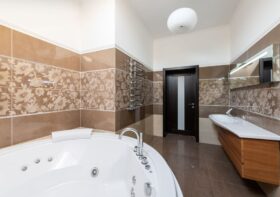
Dark hues, such as navy blue and deep grey or even black, have gained popularity in recent years and can give the room a dramatic, modern look. This effect is particularly great in larger spaces. Timeless neutral tones like beige and taupe are warm and inviting – especially when paired with contrasting accents. If you’ve got a smaller bathroom, lighter colours help to create a sense of openness and spaciousness.
I recommend creating a mood board! They help visualise your desired bathroom aesthetics by collecting images of colour palettes and design elements. Don’t be afraid to experiment and try something new, you might surprise yourself.